
$7.45
$7.45
$32.55
$68.21 $71.80
$91.11 $95.90
$48.90
$52.16 $54.90
$31.90
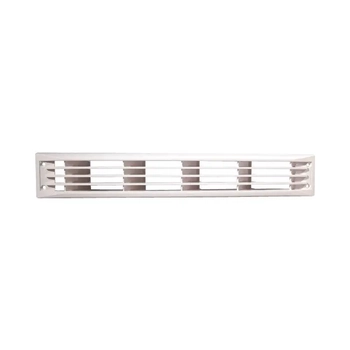
$35.90
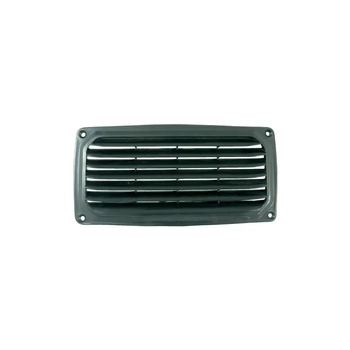
$15.90
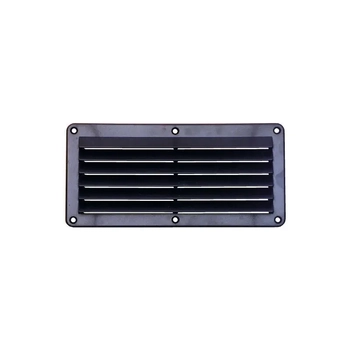
$25.90
Marine engine blowers help ventilate enclosed engine compartments by moving air through ducting to clear fumes and maintain airflow before and during engine operation. Choosing the right blower depends on your engine-compartment layout, duct diameter, mounting position and how the unit can be wired and accessed for ongoing servicing. Pre-start ventilation is standard practice on petrol inboard and stern-drive vessels running the blower for several minutes before starting the engine is a basic part of engine-bay management on these setups. This range covers inline and axial blower options for enclosed marine engine spaces.
Engine blowers are primarily used in enclosed compartments housing petrol inboard or stern-drive engines, where fumes can accumulate when the bilge is not naturally ventilated. Pre-start ventilation running the blower for several minutes before starting the engine is standard practice on many petrol-engine vessels as part of safe engine-bay management. Diesel-engine vessels and outboard setups generally have different ventilation requirements; check your engine manual for guidance on what applies to your boat.
In addition to pre-start use, blowers can be run during operation to maintain airflow in the engine space. Ducting arrangement, intake and outlet positioning, and the path of airflow through the compartment all affect how well a blower performs in a given installation.
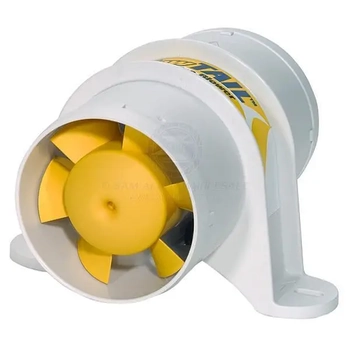
The two common formats are inline blowers, which mount within the duct run and move air along the duct path, and axial blowers, which mount at a compartment opening and push or pull air directly. Inline units suit installations where the blower needs to be tucked away from the engine and the duct does most of the work. Axial units are more direct and typically easier to service, but require accessible mounting space at the compartment face or hatch.
Duct diameter is the critical sizing check the blower should match the duct diameter of your existing or planned system. Tight bends, long runs and crushed duct sections all reduce airflow, so the duct layout should be as direct as practical. For broader engine accessory reviews and related parts, browse marine engine accessories.
Blower wiring should be kept away from fuel lines, hot exhaust surfaces and bilge water where possible. Most installations use a dedicated switch at the helm, allowing the operator to run the blower before starting the engine without leaving the helm position. Check the product specifications for voltage, current draw and connection requirements before wiring.
Where blower wiring or fuel-adjacent installation is involved, use a qualified marine electrician. Product specifications and manufacturer installation instructions should be followed for the specific model rather than assuming all blowers install identically. Where duct size, mounting position or wiring access is unclear, confirm the measurements and connection requirements before ordering.
For related engine bay servicing, also consider marine engine strainers, marine exhaust outlets, marine engine sound insulation and marine spark plugs.
A marine engine blower moves air through an enclosed engine compartment to clear fuel vapour and maintain airflow. Pre-start ventilation using a blower is standard practice on many petrol inboard and stern-drive vessels before starting the engine.
Match the blower to your duct diameter, compartment layout and mounting position. Check the product specifications for voltage, current draw and duct connection size, and follow the manufacturer installation instructions for the specific model.
Position and installation depend on your vessel design, engine compartment layout and the product specifications. Inline units mount within the duct run; axial units mount at a compartment opening. Use a qualified installer where electrical work or fuel-adjacent mounting is required.
Inline blowers require ducting as part of the airflow path. Axial blowers may work directly at a compartment opening depending on the design. Check the product listing and your vessel layout before choosing a format.
Inspect the blower, ducting, connections and switch operation as part of regular engine servicing. Look for kinked or damaged duct sections, loose connections and any signs of corrosion on electrical fittings.
ABN: 99 423 721 756