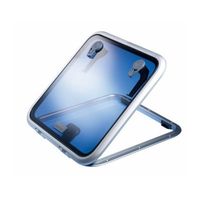
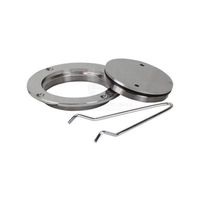
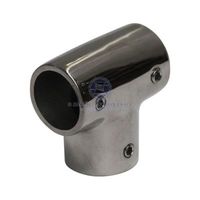
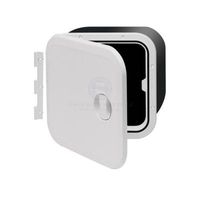
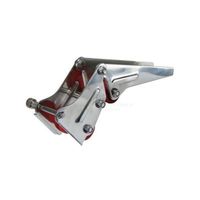
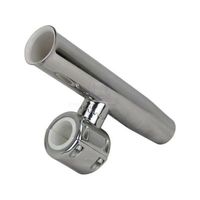
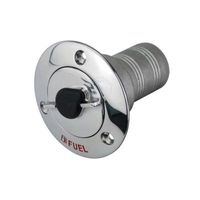
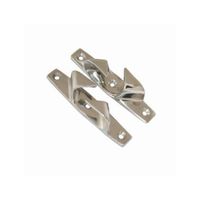
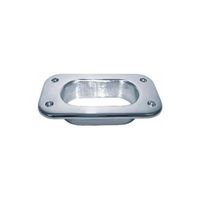
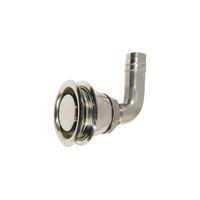
Boat deck hardware covers the fittings, fasteners and components that are permanently mounted on the deck and working surfaces of your vessel. Choosing the right hardware is not just a functional decision in a coastal salt water environment, material quality and corrosion resistance determine how long a fitting lasts and how much maintenance it will demand over the life of the vessel. From bow rollers and deck fills through to hatches, rod holders and rail fittings, this range covers marine-grade hardware for new builds, refit projects and hardware upgrades on Australian coastal and offshore vessels.
Deck hardware refers to any fitting that is permanently mounted to the deck or working surfaces of a vessel. This includes structural components like bow rollers and marine deck fills, functional items like boat hatches and portlights, fishing and recreation gear like deck mounted rod holders, and a broad range of cleats, fairleads, rail fittings and inspection plates. What unites all deck hardware is the need for marine-grade materials and properly sealed, load-rated installations.
In Australian coastal conditions, 316 stainless steel is the standard specification for exposed deck hardware. It contains added molybdenum compared to the cheaper 304 grade, which gives it significantly better resistance to pitting corrosion, crevice corrosion and salt water staining. If you see hardware simply described as "stainless" without a grade, confirm whether it is 304 or 316 before purchasing 304 will show rust staining around fastener holes and crevice areas in coastal salt air within one to two seasons.
Anodised aluminium is used for weight-sensitive applications on racing yachts and performance builds where reducing topside weight matters. Marine-grade nylon and glass-filled polymers suit lower-load applications like vent fittings, inspection port covers and non-structural components. For most permanent hardware on cruising and fishing boats in Australian conditions, 316 stainless is the appropriate starting point.
The quality of an installation depends as much on the fasteners and backing method as on the fitting itself. Through-bolted fittings on fibreglass and timber decks should always include a backing plate sized to spread the load across the laminate this prevents pull-through and deck delamination under the dynamic loads generated by anchoring, berthing and running in heavy seas.
Use A4 (316) stainless bolts and nuts in salt water environments. Zinc-plated or A2 fasteners corrode rapidly, seize into the fitting and leave rust staining on the deck surface. Seal all deck penetrations with a marine-grade sealant a dry or poorly sealed fitting allows water into the deck laminate, which leads to delamination, rot in timber components and fastener corrosion over time.
For a broader overview of all hardware categories including cabin fittings, ladders and ventilation, browse the full boat hardware range.
Marine-grade hardware is designed and tested for use in salt water environments the most common materials are 316 stainless steel, anodised aluminium and UV-stabilised marine polymers. The critical distinction from general hardware store products is sustained corrosion resistance in salt air and salt water immersion rather than just dry or indoor conditions.
316 stainless contains added molybdenum, which provides significantly better resistance to pitting and crevice corrosion in salt water compared to 304 grade. For exposed deck fittings in Australian coastal conditions, 316 is the appropriate specification. 304 will show rust staining around fastener holes and crevice areas over time in salt air.
Through-bolted hardware that will see any significant load should always use a backing plate on fibreglass and timber decks. Backing plates spread the pull-through force over a larger area and prevent deck delamination or fastener pull-out under the dynamic loads generated during anchoring, berthing and rough sea operation.
Not for any exposed or structural application. Standard hardware store fittings are typically zinc-plated mild steel or 304 stainless neither suitable for sustained salt water exposure. Use marine-grade 316 stainless or anodised aluminium for all permanent deck applications, and match the fastener grade to the fitting.
ABN: 99 423 721 756